
Employee Appreciation
What Employee Appreciation Can Learn From Chewy and Starbucks
You’ve got a Starbucks order, and somewhere there’s probably a barista who knows it. Maybe knows your name. They start making your drink when they see you walk in, and for some reason that one small thing keeps you loyal to a coffee shop that has four competitors on the same block.
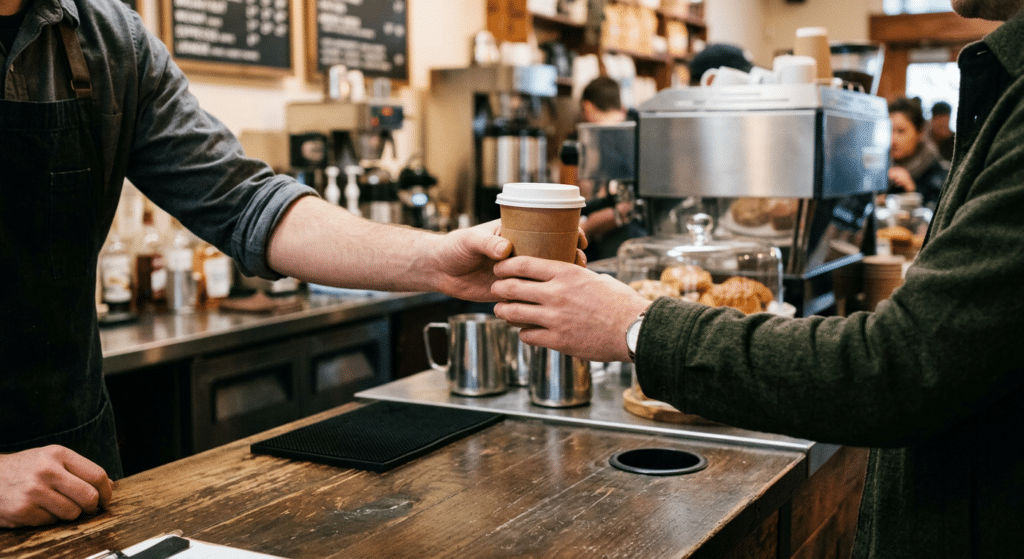
Hold onto that barista. They’re the whole point, and we’ll come back to them.
The setup is simple. Every company on the planet studies how brands like Starbucks and Chewy earn that kind of loyalty from customers. There are conferences about it. Whole careers. What almost nobody does is connect any of it to the people who actually work for them, which is a little nuts, because a big chunk of the customer loyalty everyone’s chasing is really just employees who stuck around long enough to care.
So this is a post about customer loyalty, and it’s a post about your team, because they turn out to be the same story. Four brands, then the part everybody skips.
Four Brands
The stuff you already know about customer loyalty
You get this part, so I’ll go fast.

Chewy sells pet food and somehow has customers who would take a bullet for them. Here’s how. When a customer’s pet dies, Chewy sends flowers. Sometimes a hand-painted portrait of the animal, done by a real artist, that shows up out of nowhere with no coupon and no “sorry for your loss, here’s 15% off.” Just the painting. People frame these things and put them on the mantel. Then they tell the entire internet, which is the only reason either of us knows about it.
There’s no points program doing that. No tier you hit at $500 of spend. It’s a company deciding that the worst day of your year is a good day to be a human about it, and eating the cost with nothing expected back. That’s the whole trick. The second they staple a discount code to the painting, it turns into marketing and everybody can feel it.
Starbucks built the biggest loyalty program on earth, and not with one amazing free drink a year. It was frequency. Small bits of recognition every time you show up, until a coffee run stops being a decision and turns into a habit.
60%
In fiscal 2025, Starbucks Rewards members drove nearly 60% of the company’s U.S. revenue, north of $13 billion.
(Source: Starbucks)

Sephora runs tiers with names people actually brag about (Insider, VIB, Rouge), and the dirty secret is it was never really about the discount. It’s status. Being a Rouge feels like being somebody.
80%
Beauty Insider members make up around 80% of Sephora’s sales.
(Origin: 2018 comments from Sephora’s then-CEO, repeated everywhere since.)

Costco is a concrete box with no music that charges you a fee to walk in and won’t bag your groceries, and nine out of ten members renew anyway, year after year.
90%
Costco’s membership renewal rate sits around 90% worldwide (about 92% in the U.S. and Canada).
(Source: Costco)
Different tactics, same handful of things underneath: they show up a lot, they make it feel personal, they surprise you sometimes, and they’re reliable about all of it. You knew that. You’ve felt every one of them as a customer this week.
Now the part that matters for your actual job.
The core of it
The barista is the whole argument
Go back to your barista.
The app is fine. The stars are fine. But be honest about why you actually like your Starbucks. It’s not the app. It’s that somebody behind the counter knows you, remembers your weird oat-milk-no-foam thing, and hands it over like they were glad you came in.
That person is not a loyalty program. That person is a loyal employee. They’ve been there long enough to know you, and they care enough to bother, and you cannot buy that with a points system. You get it from a human who feels good about where they work.
Now flip it. You know exactly what it feels like when this breaks. New face every visit. Nobody knows your order, and you say it three times before it’s still somehow wrong. The place feels like a transaction because, to the person making your coffee, that’s all it is. They started Tuesday and they’re already applying somewhere else.
That’s turnover, and your customers feel it before your P&L does. Every time somebody quits, everything they knew about your customers walks out the door with them, and the next person your customer meets is a stranger. The loyalty you spent years building springs a slow leak.
So here’s what the loyalty conferences skip: the customer loyalty everybody’s obsessed with mostly comes downstream of employee loyalty. The brands you admire didn’t just run clever programs. They kept people around long enough to build real relationships with customers, and people stay when they feel appreciated. Costco is famously good to its own people, which is not unrelated to the fact that the guy in the aisle has been there fifteen years and actually knows where the thing you’re looking for is.
Take the Chewy thing. Nobody actually knows how it started. Chewy’s own customer service leaders have called the origins basically folklore at this point, which is a gift to anyone who enjoys a good guess. So here’s mine, and I want to be clear that it’s a guess, not a fact.
Somewhere, years ago, a customer wrote in to cancel an order because their dog had died. And an employee on the other end, not thinking about branding or retention or lifetime value, heard a person who was hurting and did the human thing. Sent flowers. Signed the card. It wasn’t a campaign, just one person having a decent reaction to another person’s worst week.
And my hunch is that’s exactly why it spread. It was never a marketing move. In a world where most brands “show they care” by mailing you a tote bag with their logo stamped on it, a real human moment is the thing that stops people cold. You can’t write that into a brand guideline. You can only hire people who’d do it on their own, and then be smart enough to stay out of their way.
Employee loyalty is the engine. Customer loyalty is what it produces.
Which means most companies are working the wrong end of the machine. They pour the whole budget into keeping customers loyal and almost nothing into keeping the people who make customers loyal in the first place.
The Model
So point the four things at your own team
You already run the loyalty playbook on your customers, or you pay somebody to. The move is to run it on the people who make your customers loyal to begin with. Same ideas, aimed inward:
01
Starbucks
Frequency over magnitude
One big holiday gift, once a year, does less than a few smaller moments spread across the calendar. People don’t remember the average of a year, they remember whether you showed up more than once. (A gift in February for no reason beats a nicer one in December that lands with everybody else’s.)
02
Sephora & Chewy
Personalization
Recognition works when it’s obviously meant for this person and not a headcount. This one is the whole ballgame for us: the employee’s name on the gift, not the company logo. A logo makes it an ad. A name makes it “somebody saw me.”
03
Chewy
Surprise
The thing they didn’t see coming is the thing they tell people about. Expected is nice. Unexpected is a story.
04
Costco
Consistency
Do it once and disappear, and they’ll clock the disappearing faster than they clocked the gift.
None of this needs a platform or a committee. It needs somebody deciding that the people who make the whole thing run deserve the same effort you’d happily spend on a stranger with a credit card.
And listen, this is the part where I’m supposed to tell you what we do, so: that’s the entire company. We build employee appreciation programs on those four ideas, with the person’s name on the gift instead of the logo, and at least one thing in every box they didn’t see coming. The Chewy move, basically, pointed at the people already on your payroll.
You’ve felt all of this as a customer. The real question is whether your team feels it from you, because that’s where your customers’ loyalty actually starts. Not in a boardroom. In a break room, when sixty people open the same box on the same day.
Frequently Asked Questions
The questions we get a lot.
What's the difference between employee appreciation and employee recognition?
Recognition is tied to performance. You did the thing, you get the points or the shout-out. Appreciation is about the person, period. It says we’re glad you’re here, not we’re glad you hit your number. Both matter, but only one makes somebody feel valued for existing instead of producing. Appreciation is the one that builds the loyalty this whole post is about.
Does employee loyalty really affect customer loyalty?
More than most companies admit. The employee who remembers a customer’s name, catches a problem before it blows up, or just seems glad to be there is usually someone who’s stuck around and feels good about the place. High turnover means a stranger every time, and customers read that as “I’m a transaction here.” Keep your people and you keep the relationships they’ve built with your customers.
Should employee appreciation be a points program?
Usually not, and this is where a lot of companies faceplant. Points turn appreciation into a transaction (do X, earn Y), which flips the relationship into a deal instead of a gesture. The most loved brand in this post, Chewy, doesn’t run a points program at all. A gift with no strings and no scoreboard lands harder than points somebody has to earn and then do math on.
How often should you show employee appreciation?
More than once a year, which sounds obvious, and yet December is the only time most companies do anything. A few well-timed moments across the year beat one big annual gesture, because people remember whether you showed up repeatedly, not the size of any single thing. Off-calendar moments (a gift in February for no reason) tend to land hardest, since nobody’s expecting them.
Do employee appreciation programs actually improve retention?
They help, when they’re consistent and real. Feeling valued is one of the top reasons people stay, and feeling invisible is one of the top reasons they leave. Appreciation won’t rescue a broken culture or make up for underpaying anyone. But for someone on the fence, feeling like they belong somewhere is often what keeps them from returning the recruiter’s call.
Ready when you are
Let's design something your team will remember.
We handle everything. You take the credit for being the company people stay at.