
Employee Appreciation
Does Your Company Need an Employee Appreciation Program?
Somewhere right now, one of your employees just got a LinkedIn message. Whether they close the tab or schedule the call depends almost entirely on how valued they feel at work.
Feel recognized? Tab closed. Feel invisible? Resume updated by 9pm.
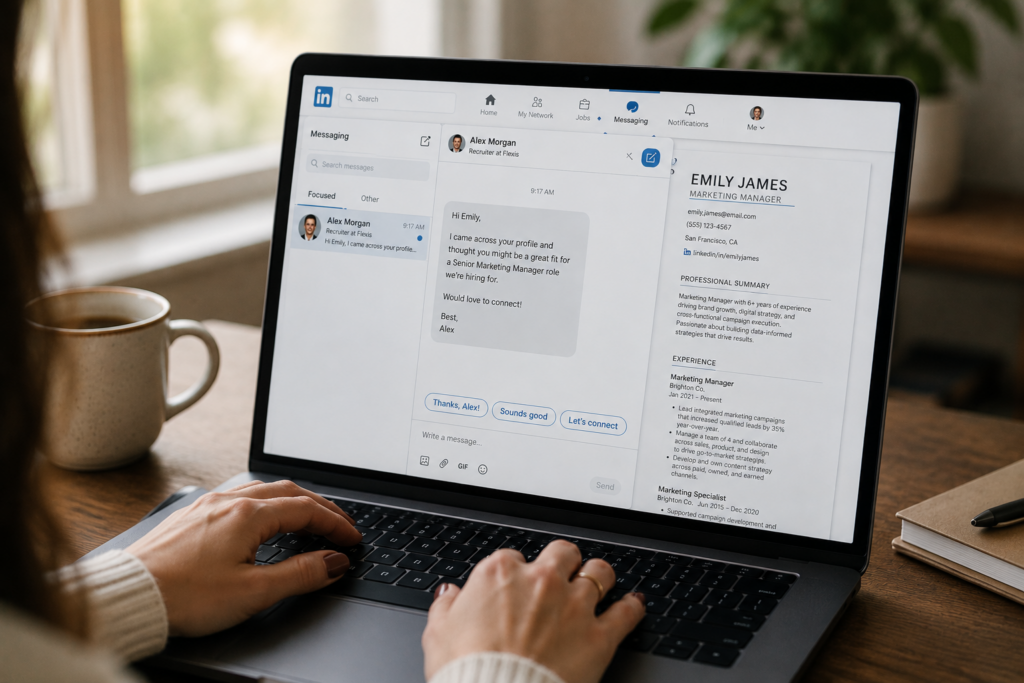
That recruiter message is basically a referendum on your company. Most people don’t know they’re failing it until someone gives notice.
The problem with leaving appreciation up to people
Companies don’t usually have an appreciation program. They have managers, and some managers are really good at this.
GTM teams tend to be naturally loud about recognition. Someone closes a deal and the Slack channel erupts. Meanwhile, across the same org, a solid engineer can do excellent work for months and hear nothing warmer than “looks good” on a code review. Same company, same payroll, wildly different experience of feeling like you matter. That’s just what happens when appreciation is left to whoever has the personality and bandwidth to express it on any given week.
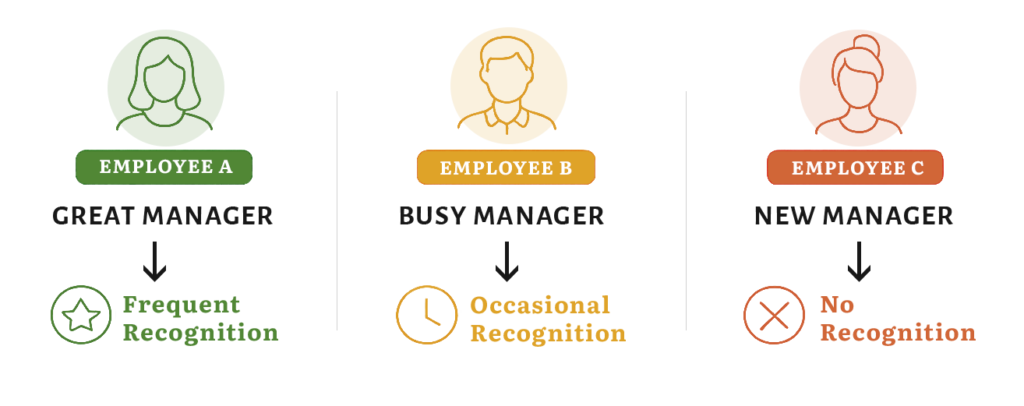
Spot bonuses and gift cards have the same problem. Two employees can do equally good work and have completely different experiences based on who their manager is, how vocal their team is, and whether anyone happened to notice that week.
A $50 Amazon gift card beats nothing, but it still requires someone making the effort to nominate you. Some people never get nominated. Same quality of work, it’s just that nobody thought to nominate them.
What an appreciation program actually looks like
An employee appreciation program is a planned set of touchpoints spread throughout the year and delivered to every employee at the same time. Whether someone gets recognized has nothing to do with their last performance review or whether their manager remembered. Everyone gets it, on schedule, because they work there.
The touchpoints vary. A seasonal care package in October feels different from a shared experience kit that arrives before a company-wide call so remote teams can actually do something together instead of just staring at a Zoom grid. The year-end gift in December should feel like a genuine thank-you, not a branded pen set that lives in a drawer forever.
The gifts are almost beside the point, honestly. What surprises people is what happens after.
Employees post a photo. A former colleague comments. Someone who doesn’t work there sees the thread and thinks, huh, they actually seem to care about their people. The HR team that planned the whole thing in a single afternoon is now running an inadvertent recruiting campaign. There are worse situations to be in.
There’s also something that happens internally that’s harder to measure but easy to notice. When everyone gets the same thing at the same time, it becomes a shared experience. Not “did you hear Jessica got a bonus?” but “did yours arrive yet?” That shift in how people talk about recognition says a lot about where a company’s headed.
Making the Business Case
The math is easy.
Retention isn’t complicated. The numbers make the case for you.
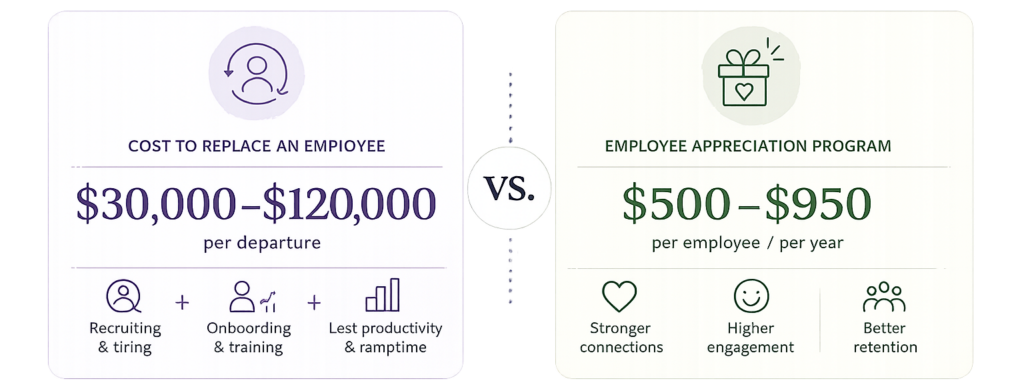
Those two numbers sitting next to each other tend to end the budget conversation. You’re not spending money on appreciation. You’re spending less money than you’d spend replacing the person.
The terrible twos
The terrible twos doesn’t just apply to toddlers in grocery stores.
Around years two and three, something shifts. The job isn’t new anymore. The excitement of starting somewhere fresh has worn off, and if there’s been no promotion, employees have started doing the math on whether this is still the right move. They know what they’re worth on the market. When a recruiter messages them at that exact moment, the timing is rarely coincidental.
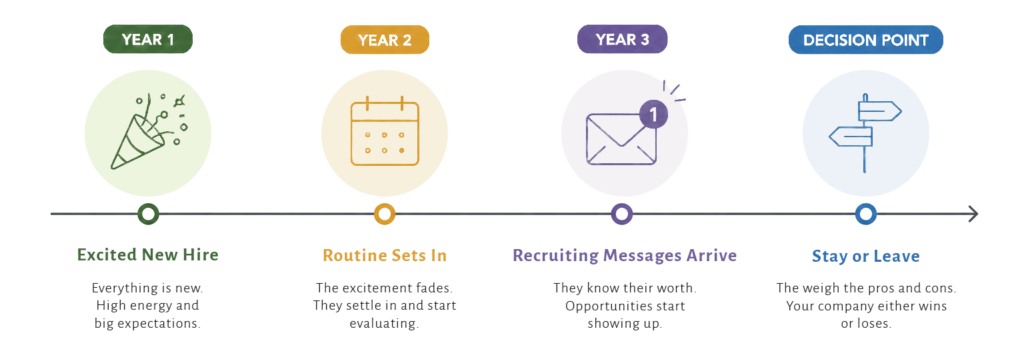
Most of the time, people don’t leave because they found something dramatically better. They leave because staying stopped feeling like the obvious choice.
Why consistency beats one big gesture
Companies that keep people don’t do it with one amazing moment. They do it by not going dark between moments.
A company does a great job welcoming a new hire. The person feels genuinely excited. Then eleven months go by, a recruiter calls, and that first impression has done about as much work as it’s going to do on its own.
Companies with strong recognition programs see retention rates more than 50% higher than companies without them. That gap matters most around the two-to-three year mark, when employees are actively weighing their options and deciding whether the recruiter call is worth a conversation.
There’s a reason “never stop dating your spouse” is evergreen advice. The effort you put into winning someone over shouldn’t evaporate the moment you’ve got them. Companies do this with employees constantly. Recruiting is basically courtship: the pitch, the interviews, the offer letter, the welcome gift if you’re doing it right. Then a lot of companies treat the signed offer as the finish line. They got the hire. Done.
Except the person they just hired is paying close attention to whether that energy continues. It usually doesn’t.
Recognition doesn’t have to be elaborate. It just has to be consistent enough that people still feel like the choice they made was the right one.
So, is this a lot of work?
It can be. A real appreciation program takes more planning than most HR teams have bandwidth for when they’re already handling everything else. For teams who want to build it themselves, here’s the step-by-step guide. Because if that’s where you’re headed, we’d rather help you do it right.
If you’d rather skip the DIY part and just see what a program could look like for your team, you can start here.
Frequently Asked Questions
The questions we get a lot.
What is an employee appreciation program?
A planned series of touchpoints delivered to every employee throughout the year. That can mean seasonal packages, shared experience kits, mid-year check-ins, year-end gifts, or moments built specifically around your company’s culture. The practical difference between this and ad-hoc recognition is that it doesn’t require anyone to remember, initiate, or happen to be feeling generous that week. Everyone gets it, on schedule, regardless of who their manager is.
How is an employee appreciation program different from spot bonuses or gift cards?
Spot bonuses depend on someone noticing your work, thinking to nominate you, and the right people agreeing. Two employees can do equally good work and have completely different experiences based on their manager or how vocal their team tends to be. A structured appreciation program removes that variable. Everyone participates on the same schedule, which makes the experience equitable in a way reactive recognition never really is.
How does employee recognition affect retention?
Companies with structured recognition programs see retention rates more than 50% higher than companies without them. That gap is most significant around the two-to-three year mark, when employees start seriously weighing their options and deciding whether to return a recruiter’s message. Consistent, predictable recognition is one of the main reasons people conclude it’s not worth the conversation.
What should an employee appreciation program include?
A mix of touchpoints across the year: seasonal moments, shared experience kits for remote or hybrid teams, mid-year and year-end appreciation, and anything tied to your company’s culture or industry rhythms. Most programs run between four and ten touchpoints per year depending on budget and goals. The specific mix matters less than the consistency.
How much does an employee appreciation program cost?
It depends on the number of touchpoints and how customized the program is. A standard program typically runs $500-650 per employee per year. More elevated programs run $750-950. Both include sourcing, packaging, and delivery. For most companies, that math looks pretty reasonable when you factor in what it actually costs to replace someone.
How is a structured appreciation program different from just having a good manager?
A good manager is great until they leave, get promoted, or burn out. When that happens, all that recognition culture walks out with them. A program belongs to the company, not to any one person, so every employee benefits from it regardless of who they report to or how naturally expressive that person happens to be.
What does employee appreciation do for recruiting?
More than most companies plan for. When employees post about gifts, talk about their workplace on social media, or just seem like they genuinely like where they work, people outside the company take notice. A well-run appreciation program tends to do recruiting work that nobody specifically budgeted for. That’s a reasonable side effect.
Can a small company run an employee appreciation program?
Yes, and honestly the logistics are easier at smaller companies. A 12-person team can run a more meaningful program than a 5,000-person company if they’ve actually planned for it. What usually gets in the way isn’t budget or headcount. It’s not having a system in place.
Ready when you are
Let's design something your team will remember.
We handle everything. You take the credit for being the company people stay at.